
Understanding What Happens During Dental Implant Surgery
If you’ve been told you’re a candidate for dental implants, it’s completely normal to feel a mix of excitement and nerves. Implants are one of the most effective long-term solutions for missing teeth — but the process involves several stages, and knowing what to expect at each one can make a real difference in how comfortable and confident you feel going in. This guide walks you through dental implant surgery from start to finish, in plain language, so there are no surprises.
Whether you’re still weighing your options or you’ve already made the decision to move forward, understanding the full timeline helps you prepare practically and mentally. At Aurora Dental’s dental implant services, our team takes time to walk every patient through the process before a single appointment is scheduled.
Step 1: The Initial Consultation and Treatment Planning
Everything starts with a thorough evaluation. During your first visit, your dentist will review your medical and dental history, take X-rays or 3D imaging, and assess the health of your jawbone and surrounding teeth. This step determines whether you’re a good candidate right away or whether preparatory work — like a bone graft or tooth extraction — is needed first.
You’ll also discuss the number of implants needed, the type of restoration that will attach to them (a single crown, a bridge, or a full arch), and a realistic timeline. This is the right moment to ask every question you have about the procedure, recovery, and cost.
Step 2: Preparatory Procedures (If Needed)
Not every patient needs additional procedures before implant placement, but some do. Common preparatory steps include:
- Tooth extraction — If a damaged tooth is still in place, it must be removed before the implant can be placed. In some cases, an implant can be placed the same day as an extraction.
- Bone grafting — When the jawbone has lost density due to tooth loss or infection, a graft builds it back up to support the implant. Healing from a graft can take several months before implant placement proceeds.
- Treating gum disease — Healthy gums are essential for implant success. Any active periodontal issues are addressed first through our preventive dentistry care.
These steps add time to the overall process, but they significantly improve long-term outcomes.
Step 3: Implant Placement Surgery
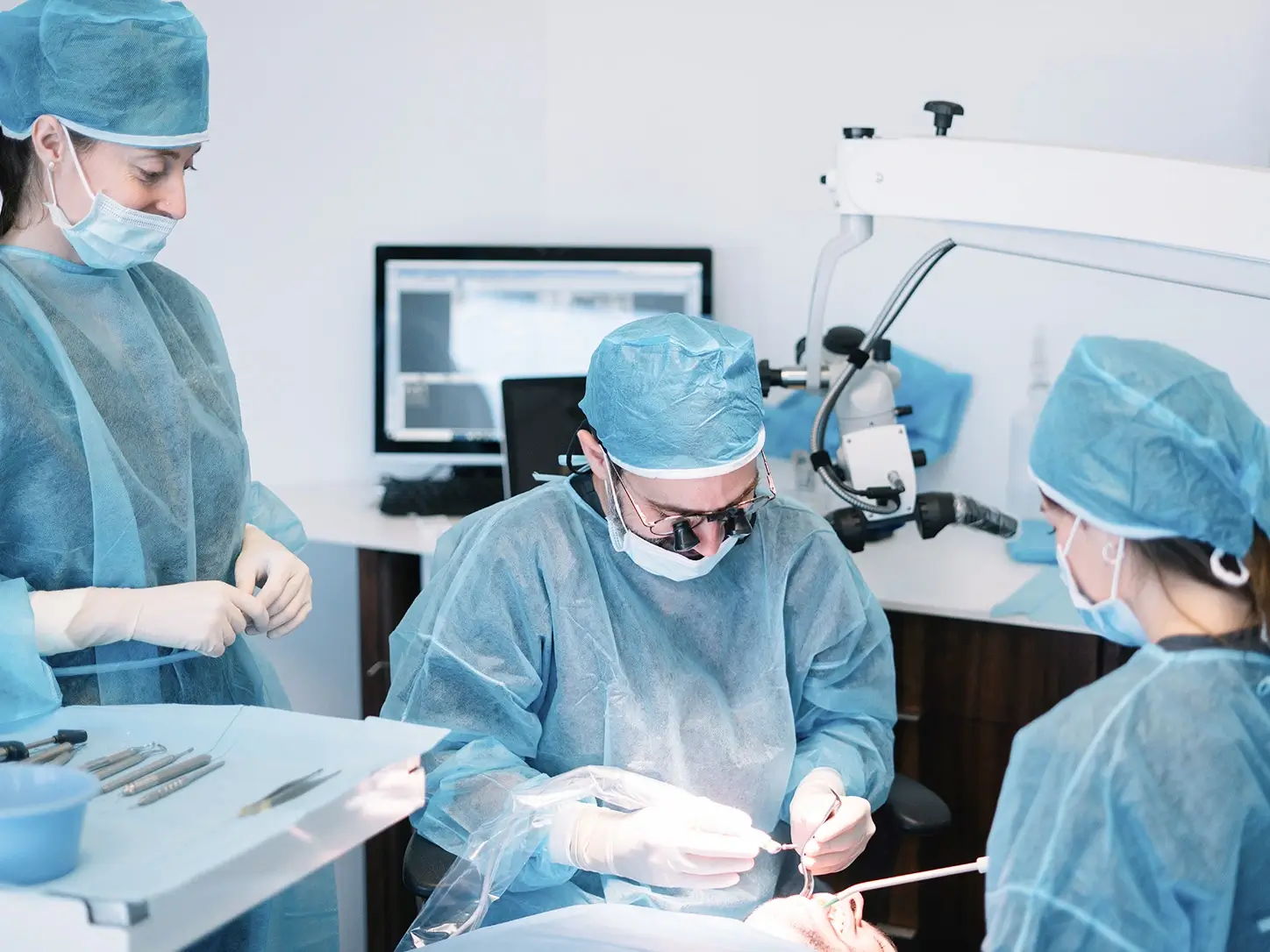
This is the main event. Implant placement is typically performed under local anesthesia, and sedation options may be available if you feel anxious. Here’s what happens during the procedure itself:
- Anesthesia is administered — The treatment area is numbed so you feel pressure but not pain.
- A small incision is made in the gum — This exposes the jawbone beneath.
- A precise channel is drilled into the bone — The titanium implant post is then carefully inserted into this channel.
- The gum tissue is closed — Stitches close the site around or over the implant.
- A healing cap or temporary restoration may be placed — This protects the implant site during recovery.
The procedure itself typically takes one to two hours per implant, though this varies. Our oral surgery team handles implant placement with care and precision, prioritizing your comfort throughout.
Step 4: Osseointegration — The Healing Phase
After surgery, the implant post needs time to fuse with the surrounding bone — a process called osseointegration. This is what makes implants so stable and long-lasting. Healing typically takes three to six months, depending on your overall health, bone density, and the location of the implant.
During this period, you’ll attend follow-up appointments so your care team can monitor healing. Most patients return to normal activities within a few days of surgery, though you’ll be advised to avoid hard foods and strenuous exercise for the first week or two.
Step 5: Abutment Placement
Once osseointegration is complete, a small connector piece called an abutment is attached to the implant post. In some cases, this is done at the same time as implant placement. The abutment is what the final crown, bridge, or prosthetic will attach to. A minor second procedure may be needed to expose the implant and place the abutment, followed by a short healing period of a few weeks.
Step 6: Placing the Final Restoration
The last step is placing your permanent crown, bridge, or other restoration. Impressions or digital scans of your mouth are taken and sent to a dental lab, where your custom restoration is fabricated to match the size, shape, and color of your surrounding teeth. Once it’s ready, it’s secured to the abutment — and your new smile is complete.
If you’re still deciding between implants and other options, the blog post Dental Implants vs Dentures: Which Is Better for You? offers a helpful side-by-side look. You can also explore our existing resource on the pros and cons of dental implants vs. dentures to help clarify your thinking.
What Recovery Really Looks Like
Most patients are pleasantly surprised by how manageable recovery is. Swelling, mild soreness, and some bruising in the first few days are normal and typically respond well to over-the-counter pain relievers and ice packs. Soft foods, good oral hygiene, and avoiding smoking all support faster healing. For a detailed post-surgery plan, keep an eye out for our upcoming post, How to Care for Dental Implants After Surgery in Winter Haven.
If you’re a new patient in the area, our Winter Haven dental practice is welcoming new patients and would be glad to schedule your implant consultation.
Frequently Asked Questions
Is dental implant surgery painful?
Most patients report feeling pressure during the procedure but not sharp pain, thanks to local anesthesia. Post-surgery discomfort is usually mild and manageable with over-the-counter pain relief. Your care team will give you specific guidance before you leave the office.
How long does the entire dental implant process take?
From consultation to final crown, the process typically takes anywhere from three to nine months, depending on whether preparatory procedures are needed and how quickly your bone heals during osseointegration. Your dentist will give you a personalized timeline at your evaluation.
Am I a good candidate for dental implants?
Good candidates generally have adequate jawbone density, healthy gums, and no uncontrolled systemic health conditions. A thorough evaluation will determine whether implants are right for you or whether preparatory steps are needed first. The sibling post Signs You Need a Dental Implant: Key Warning Signals covers the early indicators worth discussing with your dentist.
What happens if I don’t have enough bone for an implant?
Bone grafting can rebuild lost bone density and make implant placement possible for many patients who initially don’t qualify. Your dentist will assess your bone volume during the consultation and recommend the appropriate path forward.
How do I get started with dental implants at Aurora Dental?
The first step is a consultation where your dentist evaluates your oral health and discusses your goals. From there, a personalized treatment plan is created. You can contact Aurora Dental to schedule your appointment and take the first step toward a complete, confident smile.
Ready to learn whether dental implants are the right choice for you? The team at Aurora Dental in Winter Haven, FL is here to answer your questions, walk you through your options, and create a plan that fits your life. Reach out today to book your consultation — a healthier, complete smile is closer than you think.