The Tooth Replacement Decision That Matters Most
If you’ve recently lost a tooth — or several — you’re probably already hearing two words repeated by friends, family, and your dentist: implants and dentures. Both are proven, widely used options for replacing missing teeth, but they work very differently, feel very different, and come with different long-term considerations. For patients in Winter Haven and throughout Central Florida, the right choice often comes down to your oral health, your lifestyle, and what you want your smile to do for you over the next decade or more.
This guide is designed to help you think through the comparison clearly — without pressure and without confusing jargon. Whether you’re replacing a single tooth or several, understanding the trade-offs between dental implants and dentures is the first step toward making a decision you’ll feel good about.
What Are Dental Implants?
A dental implant is a small titanium post that is surgically placed into the jawbone, where it fuses with the bone over time through a process called osseointegration. Once healed, a custom crown is attached to the top of the post, creating a replacement tooth that looks, feels, and functions almost identically to a natural one. You brush it, floss it, and bite with it just as you would any other tooth.
Implants are considered the gold standard for tooth replacement because they address the root of the problem — literally. When a tooth is lost, the jawbone beneath it begins to shrink over time because it no longer receives the stimulation it needs. An implant replicates that stimulation, helping to preserve bone structure and facial shape over the long term. You can explore the full scope of what this treatment involves on our dental implants service page.
What Are Dentures?
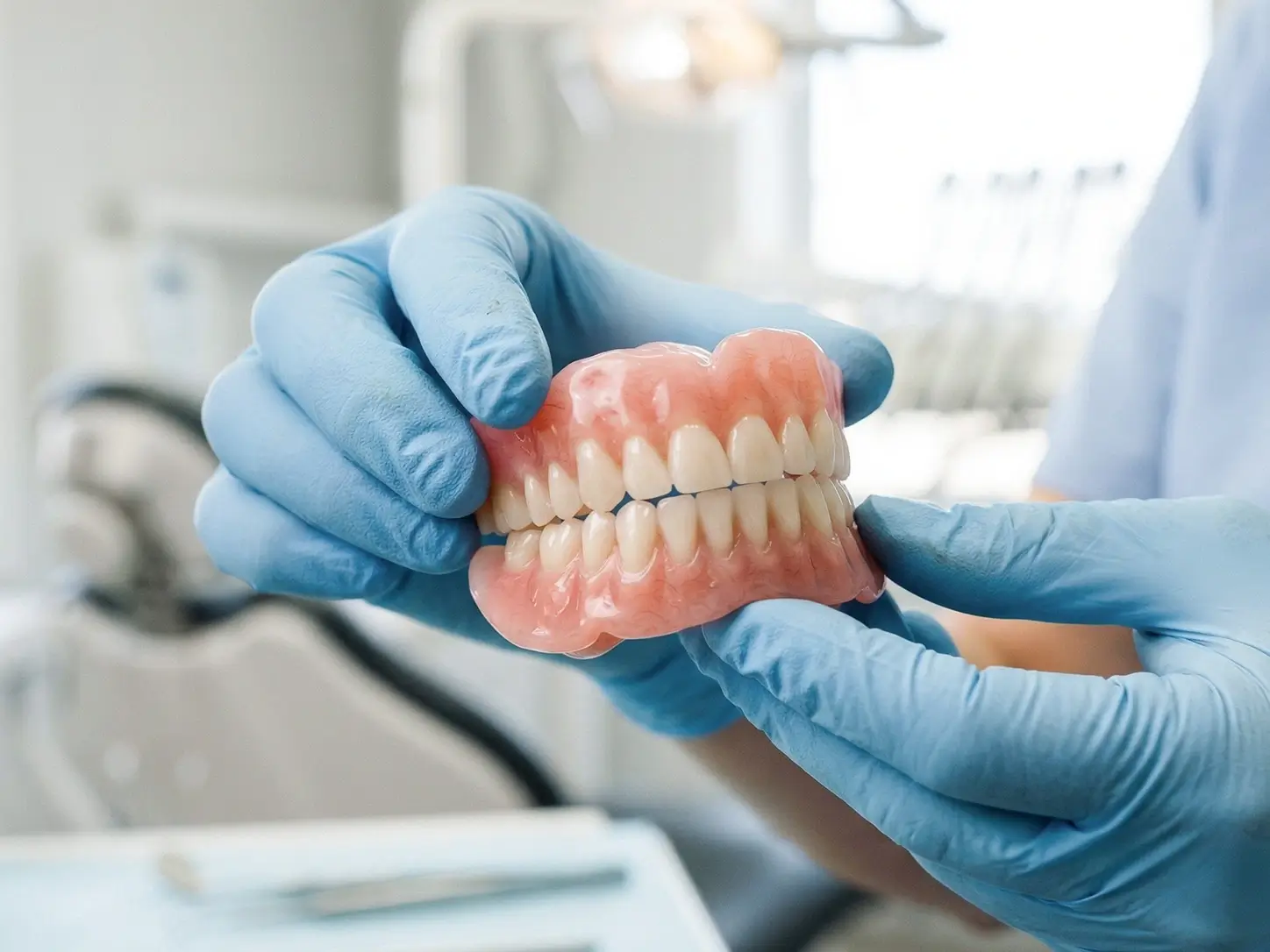
Dentures are removable appliances — either full (replacing an entire arch of teeth) or partial (filling in gaps among remaining natural teeth) — that rest on the gums and are held in place by suction, clasps, or dental adhesive. Modern dentures are far more natural-looking and comfortable than earlier generations, and they remain a reliable, accessible option for many patients.
Because they sit on top of the gum line rather than anchoring into the bone, dentures don’t prevent bone loss the way implants do. Over time, the shape of the jaw can change, which may require periodic refitting or replacement of the denture itself. If you’re weighing full versus partial options, our post on partial dentures vs. full dentures offers a helpful breakdown of each.
Key Differences at a Glance
- Stability: Implants are fixed in place and won’t shift while eating or speaking. Dentures can move, especially as the jawbone changes shape over time.
- Bone health: Implants stimulate the jawbone and help prevent deterioration. Dentures do not provide this benefit.
- Maintenance: Implants are cared for just like natural teeth. Dentures must be removed nightly, soaked, and cleaned separately.
- Longevity: With proper care, implants can last decades. Dentures typically need to be relined or replaced every five to ten years.
- Upfront cost: Implants generally involve a higher initial investment. Dentures tend to be more affordable at the outset, which is an important consideration for many patients — and resources like our guide on affordable denture options in Florida can help you plan.
- Candidacy: Not everyone qualifies for implants immediately. Sufficient bone density and good overall oral health are typically required.
Which Option Might Be Right for You?
There’s no single answer that fits every patient, but there are patterns worth considering. Implants tend to be a strong fit for patients who are in good general health, have adequate bone density, and are looking for a long-term solution that requires minimal lifestyle adjustment. If you’re replacing one or a few teeth and want something that feels permanent, implants are often worth the investment.
Dentures may be the better starting point if you need to replace many teeth at once, if cost is a significant constraint right now, or if certain health conditions make surgery less advisable. They can also serve as a transitional solution while you build toward implants later.
It’s also worth knowing that these options aren’t always mutually exclusive. Implant-supported dentures — which use a small number of implants to anchor a full denture — combine the affordability of dentures with much of the stability of implants. Our prosthodontic services include this kind of comprehensive planning for patients with more complex needs.
If you’re still gathering information before your consultation, the sibling posts in this series may also be useful: Signs You Need a Dental Implant: Key Warning Signals, What to Expect During Dental Implant Surgery, Step by Step, and How to Care for Dental Implants After Surgery in Winter Haven each cover a different part of the implant journey in detail.
What the Consultation Process Looks Like
If you’re leaning toward implants but aren’t sure you qualify, the best next step is a thorough evaluation. At Aurora Dental, that typically includes a review of your oral health, an assessment of bone volume, and a conversation about your goals and timeline. Patients in Winter Haven can get started easily — our Winter Haven location is welcoming new patients and can walk you through your options without any pressure to commit on the spot.
Frequently Asked Questions
Are dental implants painful to get?
The procedure is performed under local anesthesia, so most patients report feeling pressure rather than sharp pain during placement. Mild soreness in the days following surgery is common and typically manageable with over-the-counter pain relief. Most people find the recovery more straightforward than they expected.
How long do dental implants last compared to dentures?
With consistent oral hygiene and regular dental visits, implants can last 20 years or more — sometimes a lifetime. Dentures generally need to be relined or replaced every five to ten years as the shape of the jaw changes over time.
Can I get implants if I’ve worn dentures for years?
Possibly, but long-term denture wear is often associated with bone loss, which can affect implant candidacy. A thorough evaluation — including imaging — will determine whether you have sufficient bone density or whether a bone graft might be needed first.
Does insurance cover dental implants or dentures?
Coverage varies widely by plan. Many insurance plans offer partial coverage for dentures, while implant coverage is less consistent. Aurora Dental works with most major dental plans and can help verify your benefits before treatment begins.
What if I’m not sure which option is right for me?
That’s exactly what a consultation is for. A dentist who understands your full oral health picture — bone density, gum health, number of missing teeth, and personal goals — is in the best position to recommend the option that will serve you well long-term. You don’t need to have it figured out before you come in.
Ready to Find Out Which Option Is Right for You?
The best way to answer the implants-versus-dentures question isn’t to search for a universal answer — it’s to get a personalized evaluation from a dental team that takes the time to understand your situation. Aurora Dental serves patients across Winter Haven and Central Florida with honest, clear guidance and treatment options designed to fit real lives and real budgets. Call us at (863) 345-8690 or book your appointment online to get started today.